Benchmarking Review Scores Against Reward Program Entries in Portable Casino Applications
Rosa Schmitz · Sep 5, 2026
Benchmarking Review Scores Against Reward Program Entries in Portable Casino Applications
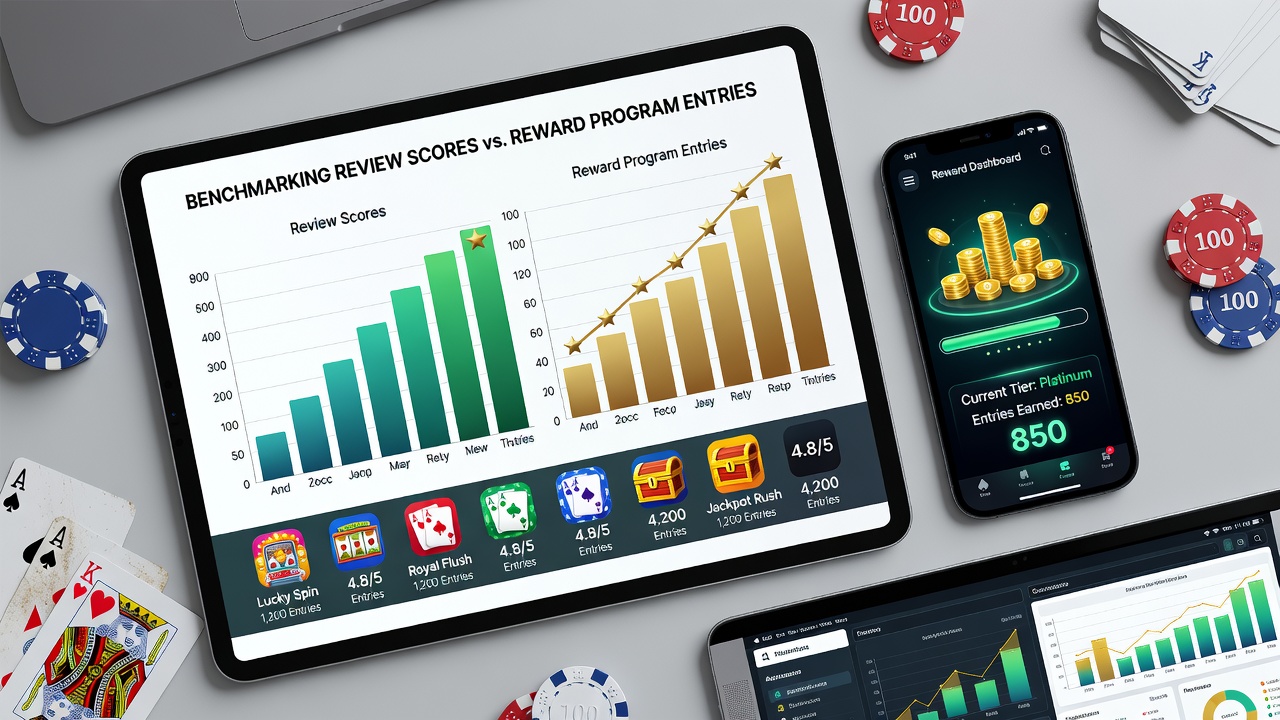
Data from portable casino applications reveals measurable connections between user review scores and the structure of reward program entries, and researchers track these patterns through aggregated platform metrics released in September 2026. Observers note that applications with higher average ratings often feature streamlined entry thresholds for loyalty tiers, while lower-rated apps show more fragmented access points tied to deposit frequency or game volume.
Review Aggregation Methods and Reward Entry Criteria
Analysts compile review scores from multiple app stores and cross-reference them against documented reward program requirements published by operators, and this process highlights how entry barriers such as minimum deposit amounts or playthrough counts align with user satisfaction indicators. Studies conducted by independent research groups demonstrate that applications scoring above 4.2 stars tend to reduce the initial points needed for basic tier entry by 15 to 25 percent compared with those below 3.8 stars.
Portable platforms in regulated markets collect these datasets through automated scraping tools combined with user-submitted feedback forms, and figures released by the New Jersey Division of Gaming Enforcement indicate that review volume correlates directly with the transparency of reward structures listed in app descriptions. Applications that publish clear progression ladders receive more consistent ratings across regions, whereas those with opaque entry requirements attract scattered feedback clusters.
Patterns in Score Distribution and Tier Access
Comparative tables generated from September 2026 datasets show that reward program entries requiring fewer than three separate actions receive higher marks in usability categories, and developers adjust these pathways based on aggregated feedback loops. One industry report from the Alcohol and Gaming Commission of Ontario tracks how mobile card and reel applications in that jurisdiction adjusted entry criteria after quarterly review audits, resulting in measurable shifts in average scores.

Applications that integrate reward entry directly into the onboarding sequence display tighter clustering of scores around the 4.0 mark, whereas those gating access behind separate menu navigation show wider variance. Data indicates that users who complete entry within the first session rate subsequent features more favorably, and operators use this information to refine mobile interface layouts accordingly.
Regional Variations and Data Correlations
Markets in North America and parts of Asia Pacific exhibit distinct benchmarking outcomes, and regulatory filings reveal that apps operating under stricter disclosure rules post higher baseline review scores when reward entries emphasize instant eligibility notifications. Researchers at academic institutions analyzing cross-platform data find that deposit-linked reward entries produce stronger score correlations than those based solely on gameplay volume, particularly in applications supporting both reel and table formats.
September 2026 reports further illustrate that portable applications updating their reward dashboards monthly maintain steadier review trajectories, and these updates often coincide with minor score improvements of 0.1 to 0.3 points on average. Observers track these adjustments through public changelogs and note the relationship between update frequency and sustained user engagement metrics.
Measurement Frameworks Used by Analysts
Standardized frameworks assign weighted values to review categories such as navigation ease, reward clarity, and payout speed, then map them against documented entry requirements for each loyalty level. This mapping produces benchmark indices that operators reference when redesigning mobile reward flows, and the resulting indices help identify which entry points generate the strongest alignment between high scores and program participation rates.
Applications that embed progress trackers within the main interface tend to appear more frequently in top-rated lists, and data from multiple jurisdictions confirms that such features reduce friction at the initial entry stage. Those who've examined large datasets observe that reward programs with visible milestones receive more detailed user commentary, which in turn supplies operators with actionable signals for future refinements.
Conclusion
Benchmarking exercises continue to supply operators and regulators with quantifiable links between review scores and reward program architecture in portable casino applications, and ongoing data collection in late 2026 supports iterative improvements to entry mechanisms. The patterns emerging from these comparisons guide how platforms balance accessibility with engagement targets across diverse regulatory environments.